
How to Write a Perfect IBDP English Essay
Master the IBDP English essay with our step-by-step guide! Learn about structure, arguments, and techniques to achieve top marks and excel in your coursework.
EDUCATION
Dr. Monica Pathak
9/19/20248 min read


How to Write a Perfect IBDP English Essay: A Step-by-Step Guide for Students
Are you struggling to write that perfect IBDP English essay? 😓 You're not alone. Many students find themselves overwhelmed by the complexity of the task, unsure where to begin or how to structure their thoughts effectively.
Imagine confidently crafting an essay that not only meets but exceeds your examiner's expectations. 🌟 Picture yourself effortlessly weaving compelling arguments, showcasing your mastery of language and style, and leaving a lasting impression with your writing. This isn't just a dream – it's an achievable reality with the right guidance and techniques.
In this comprehensive guide, we'll walk you through the seven essential steps to writing a flawless IBDP English essay. From understanding the crucial essay structure to polishing your final draft, we'll cover everything you need to know to transform your writing and boost your grades. Let's dive in and unlock the secrets to essay-writing success! 🔑📝


Understanding the IBDP English Essay Structure
A. Analyzing the question
Before diving into writing, it's crucial to thoroughly analyze the essay question. Identify the key terms, command words, and the specific focus of the question. For example:
Key terms: Look for subject-specific vocabulary
Command words: "Analyze," "Compare," "Discuss," etc.
Focus: Determine the scope and limitations of the question
B. Organizing your ideas effectively
Once you've analyzed the question, organize your ideas using a method that works best for you. Consider using:
Mind maps
Bullet point lists
Venn diagrams (for comparisons)
Timeline (for chronological events)
C. Crafting a strong thesis statement
Your thesis statement is the backbone of your essay. It should:
Clearly state your main argument
Be concise and specific
Address all parts of the question
Provide a roadmap for your essay
D. Planning your response
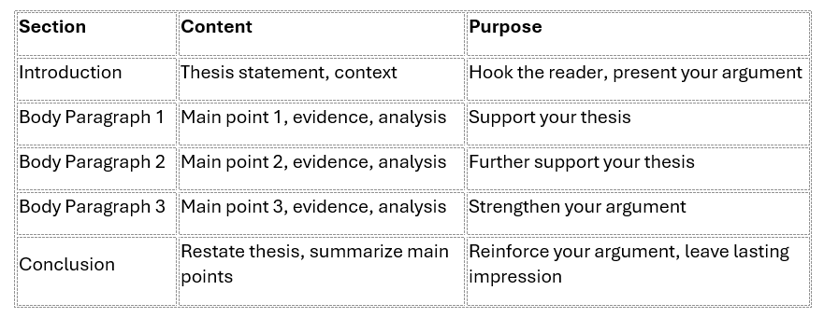
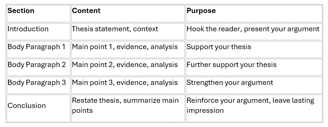
A well-structured plan is essential for a coherent essay. Use this table to outline your essay:


Developing Compelling Arguments
Now that we understand the structure of an IBDP English essay, let's focus on developing compelling arguments that will form the core of your essay. This section will guide you through the process of creating strong, well-supported arguments that will impress your examiners.
A. Balancing analysis and personal interpretation
In IBDP English essays, striking the right balance between objective analysis and personal interpretation is crucial. Here's how to achieve this:
Analyze the text objectively, focusing on literary elements and techniques
Offer your personal interpretation, supported by textual evidence
Connect your interpretation to broader themes or contexts
B. Integrating critical perspectives
Incorporating critical perspectives can significantly enhance your essay. Consider the following approaches:
Research relevant literary criticism
Compare and contrast different critical viewpoints
Evaluate the strengths and weaknesses of each perspective
Synthesize these perspectives with your own analysis
C. Applying literary devices
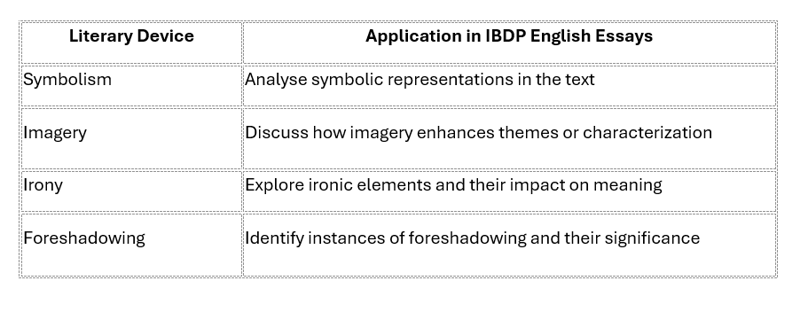
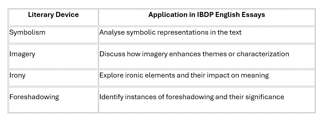
Effective use of literary devices can strengthen your arguments. Here's a table showcasing some key literary devices and their applications:
D. Selecting relevant textual evidence
To support your arguments effectively:
Choose quotations that directly relate to your point
Analyze the selected evidence in depth
Explain how the evidence supports your argument
Avoid over-quoting; prioritize quality over quantity
By following these guidelines, you'll be well-equipped to develop compelling arguments that form the backbone of a strong IBDP English essay. Next, we'll explore how to master language and style to elevate your writing further.


Mastering Language and Style
Now that we've covered developing compelling arguments, let's focus on mastering language and style in your IBDP English essay. This crucial aspect can elevate your writing from good to exceptional.
Avoiding common grammatical errors
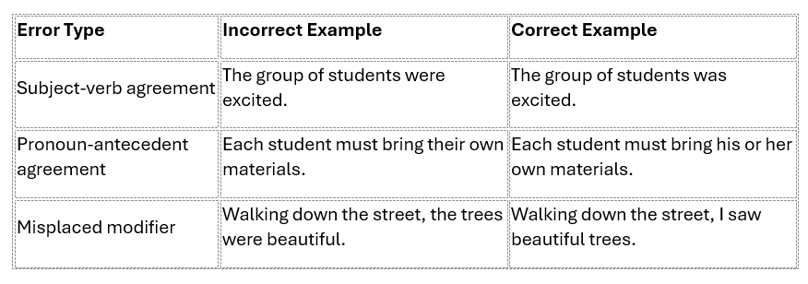
To maintain credibility and clarity in your essay, it's essential to avoid common grammatical mistakes. Here are some key areas to watch out for:
Subject-verb agreement
Pronoun-antecedent agreement
Misplaced modifiers
Run-on sentences and comma splices
Maintaining formal academic tone
In an IBDP English essay, it's crucial to maintain a formal academic tone throughout. This involves:
Using third-person perspective
Avoiding contractions and colloquialisms
Employing objective language
Minimizing personal pronouns
Employing varied sentence structures
To enhance the flow and engagement of your essay, incorporate a variety of sentence structures:
Simple sentences for emphasis
Compound sentences to connect related ideas
Complex sentences to show relationships between ideas
Compound-complex sentences for sophisticated arguments
Enhancing vocabulary
A rich vocabulary can significantly improve the quality of your essay. Consider these strategies:
Use precise and specific words
Incorporate academic and subject-specific terminology
Avoid repetition by using synonyms
Employ transitional phrases to improve coherence
By mastering these language and style elements, you'll be well on your way to crafting a polished and sophisticated IBDP English essay. Next, we'll explore how to perfect your essay's introduction, setting the stage for a compelling argument.


Perfecting Your Introduction
A well-crafted introduction is crucial for setting the tone of your IBDP English essay and engaging your reader from the start. Let's explore the key components of a perfect introduction:
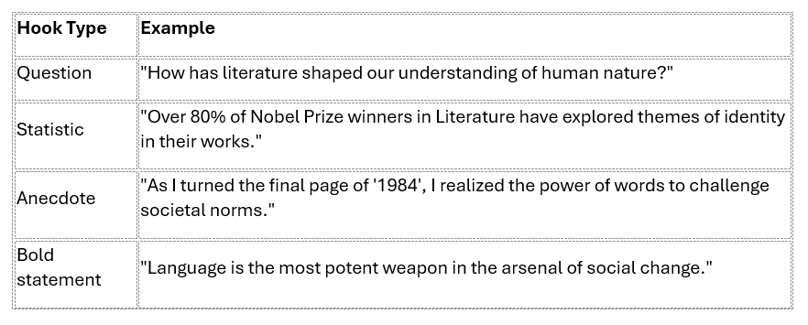
Crafting an engaging hook
Begin your essay with a compelling hook that captures your reader's attention. Consider these effective techniques:
Pose a thought-provoking question
Share a surprising statistic
Present a vivid anecdote
Offer a bold statement
Providing context
After your hook, offer relevant background information to orient your reader. This may include:
Historical or cultural context of the literary work
Brief overview of the author's background
Explanation of key terms or concepts
Presenting your thesis clearly
Conclude your introduction with a clear, concise thesis statement that outlines your main argument. Your thesis should:
Address the essay prompt directly
Provide a roadmap for your essay's structure
Be specific and arguable
Now that we've covered the essential elements of a strong introduction, let's move on to crafting effective body paragraphs that support your thesis.


Writing Effective Body Paragraphs
Now that we've covered the introduction, let's dive into crafting effective body paragraphs for your IBDP English essay. The body of your essay is where you'll develop your arguments, present evidence, and demonstrate your analytical skills.
A. Addressing counterarguments
Addressing counterarguments shows critical thinking and strengthens your overall argument. Here's how to do it effectively:
Identify potential opposing viewpoints
Present them fairly and objectively
Acknowledge their validity (if applicable)
Refute or qualify the counterargument with evidence and reasoning
B. Balancing evidence and analysis
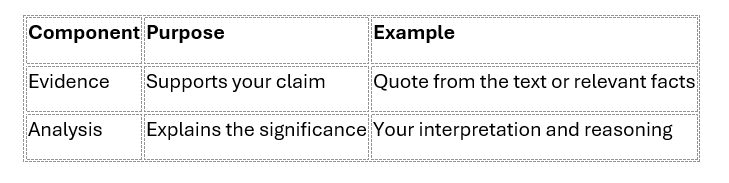
A well-structured body paragraph should maintain a balance between evidence and analysis:
Aim for a 1:2 ratio of evidence to analysis to ensure thorough exploration of your ideas.
C. Seamless transitions between ideas
Smooth transitions help maintain the flow of your essay. Use transitional phrases to connect:
Paragraphs: "Building on this idea..."
Ideas within paragraphs: "Furthermore," "In contrast," "Similarly"
Evidence and analysis: "This demonstrates," "As evidenced by"
D. Topic sentences that support your thesis
Each body paragraph should begin with a strong topic sentence that:
Relates directly to your thesis
Introduces the main idea of the paragraph
Provides a clear focus for the subsequent evidence and analysis
Remember, effective body paragraphs are the backbone of your IBDP English essay. By addressing counterarguments, balancing evidence and analysis, using seamless transitions, and crafting strong topic sentences, you'll create a compelling and well-structured argument. Next, we'll explore how to craft a powerful conclusion that ties everything together.


Crafting a Powerful Conclusion
As we approach the final stage of your IBDP English essay, it's crucial to leave a lasting impression on your reader. A well-crafted conclusion not only wraps up your essay but also reinforces your main arguments and leaves the reader with something to ponder.
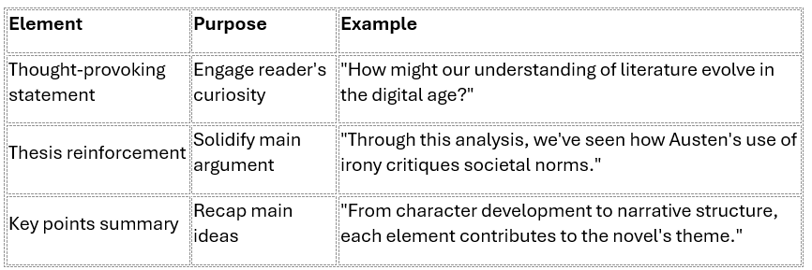
A. Ending with a thought-provoking statement
To create a memorable conclusion, consider ending with a thought-provoking statement that:
Challenges the reader's perspective
Raises a new question related to your topic
Offers a call to action or suggestion for further exploration
Example:
"As we continue to explore the complexities of Shakespeare's characters, we must ask ourselves: How do these centuries-old narratives still resonate with our modern experiences?"
B. Reinforcing your thesis
Your conclusion should circle back to your thesis statement, reinforcing the main argument of your essay. This can be done by:
Restating your thesis in a new light
Showing how your evidence supports your central claim
Emphasizing the significance of your argument in a broader context
C. Summarizing key points
Provide a concise summary of your main points to remind the reader of the journey they've taken through your essay. Use this opportunity to:
Highlight the most compelling evidence
Reiterate the connections between your arguments
Demonstrate the logical progression of your ideas
Here's a table summarizing the key elements of a powerful conclusion:
By incorporating these elements, your conclusion will not only summarize your essay effectively but also leave a lasting impact on your reader, showcasing your mastery of IBDP English essay writing.


Polishing Your Essay
Now that you've crafted your IBDP English essay, it's time to refine and perfect your work. This crucial step can elevate your essay from good to outstanding.
A. Final revisions and formatting
When polishing your IBDP English essay, pay close attention to the following:
Coherence and flow between paragraphs
Consistency in argument presentation
Proper citation and referencing
Adherence to word count limits
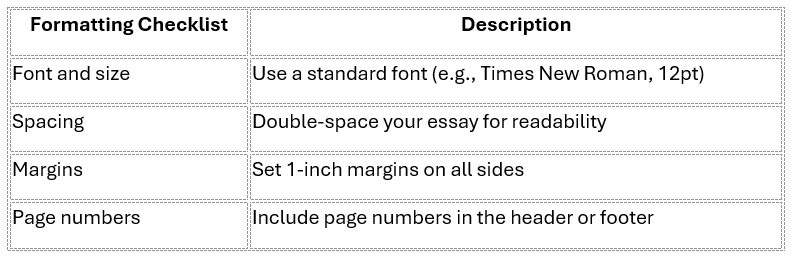
B. Seeking teacher feedback
Your teacher is an invaluable resource in the essay polishing process. Consider:
Scheduling a one-on-one consultation
Asking specific questions about areas of uncertainty
Requesting guidance on strengthening your arguments
Discussing how to improve your language and style
C. Peer review strategies
Engaging in peer review can provide fresh perspectives on your work:
Organize a small group review session
Use a structured feedback form to guide peer comments
Focus on both content and technical aspects of the essay
Reciprocate by offering thoughtful feedback on others' essays
D. Proofreading techniques
To catch those pesky errors, try these proofreading methods:
Read your essay aloud to identify awkward phrasing
Use text-to-speech software to hear your essay read back to you
Print your essay and proofread on paper
Take breaks between proofreading sessions for a fresh perspective
With these polishing techniques, you'll ensure your IBDP English essay shines. Next, we'll explore some final tips to help you excel in your essay writing journey.


Writing a perfect IBDP English essay requires a comprehensive approach that encompasses several key elements. From understanding the essay structure to developing compelling arguments, mastering language and style, and crafting effective introductions, body paragraphs, and conclusions, each step plays a crucial role in creating a standout piece of writing. By focusing on these aspects and taking the time to polish your work, you can significantly enhance the quality of your essays.
Remember, practice makes perfect. As you continue to hone your skills and apply these techniques, you'll find that writing high-quality IBDP English essays becomes more natural and enjoyable. Embrace the process, seek feedback from your teachers and peers, and don't be afraid to revise and refine your work. With dedication and attention to detail, you'll be well on your way to academic success in your IBDP English course.